

These days, I often find myself solving a problem halfway through. AI is able to complete the rest. It’s able to remember what I forget.
In fact, the leading questions towards the end of an agent’s response, prompt me to think what the agents want me to think. If I’m coming with the intention of doomprompting (essentially finding my way out by asking low-effort questions), I’m likely being swayed in a direction that a normalized system wants me to go – towards efficient mediocrity.
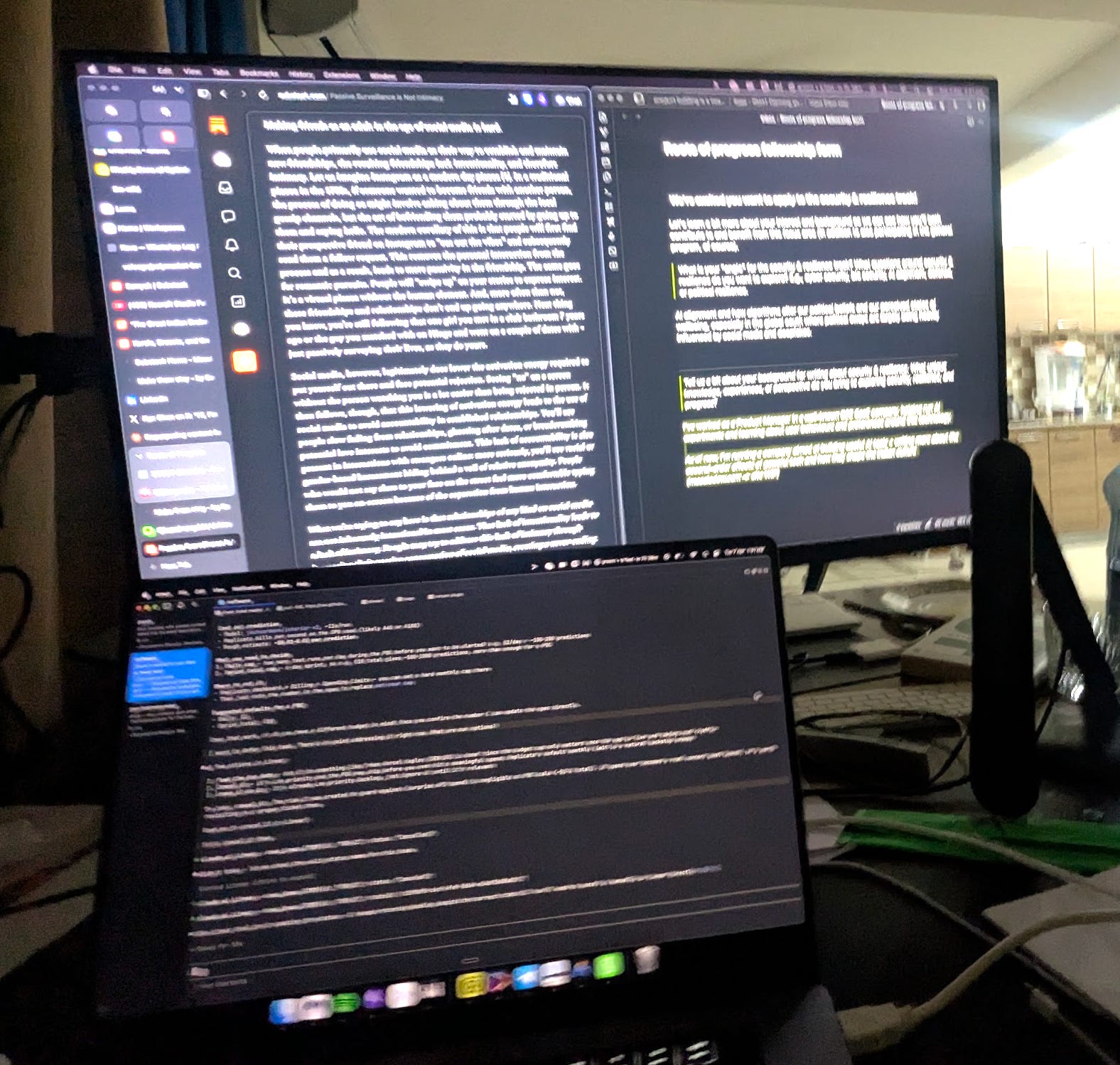
This autocomplete of thought often gets me to complete my shit, but I fear what will happen to my brain if I don’t spend enough time thinking hard about things. What if the shit I produce remains in an eternal state of shittyness? Mediocrity is not difficult, which is why it is what it is.
Slop.

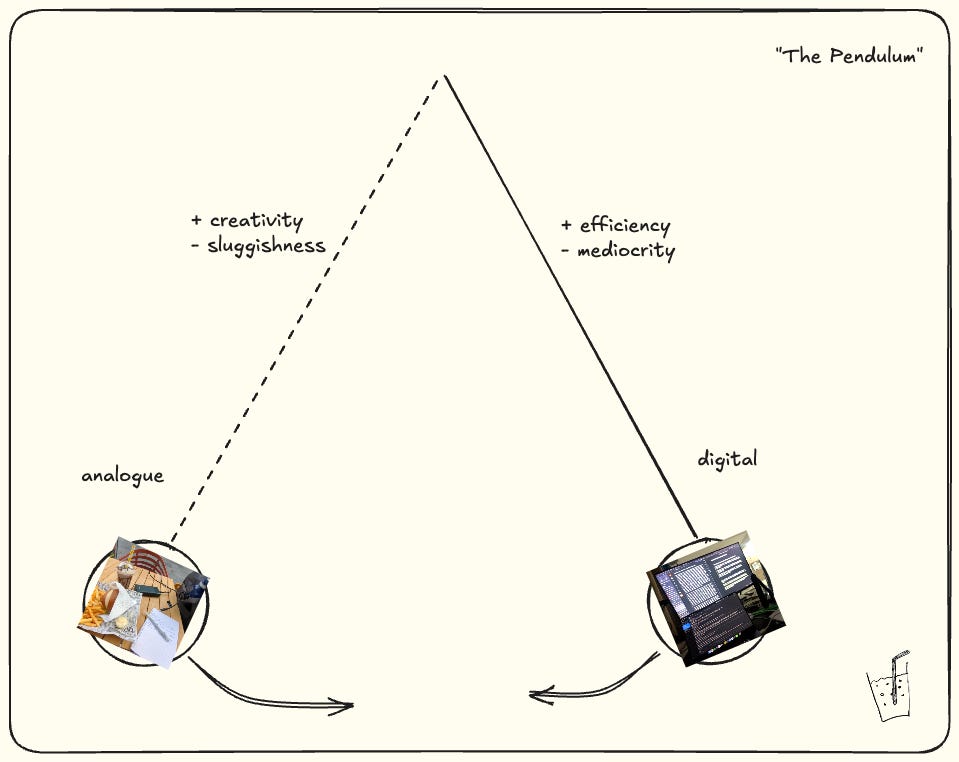
I think of this as a double-sided problem in 2026 and beyond. Using AI tools to get shit done as fast as possible and go as far as possible. On the other hand, there’s a separate (and arguably more important skill in this economy) of working hard through problems and thinking about them in full. Holding onto thoughts, letting them ferment and come up with a new direction – fairly free from the bias of normalcy. Unbounded, creative, weird, surprisingly useful.
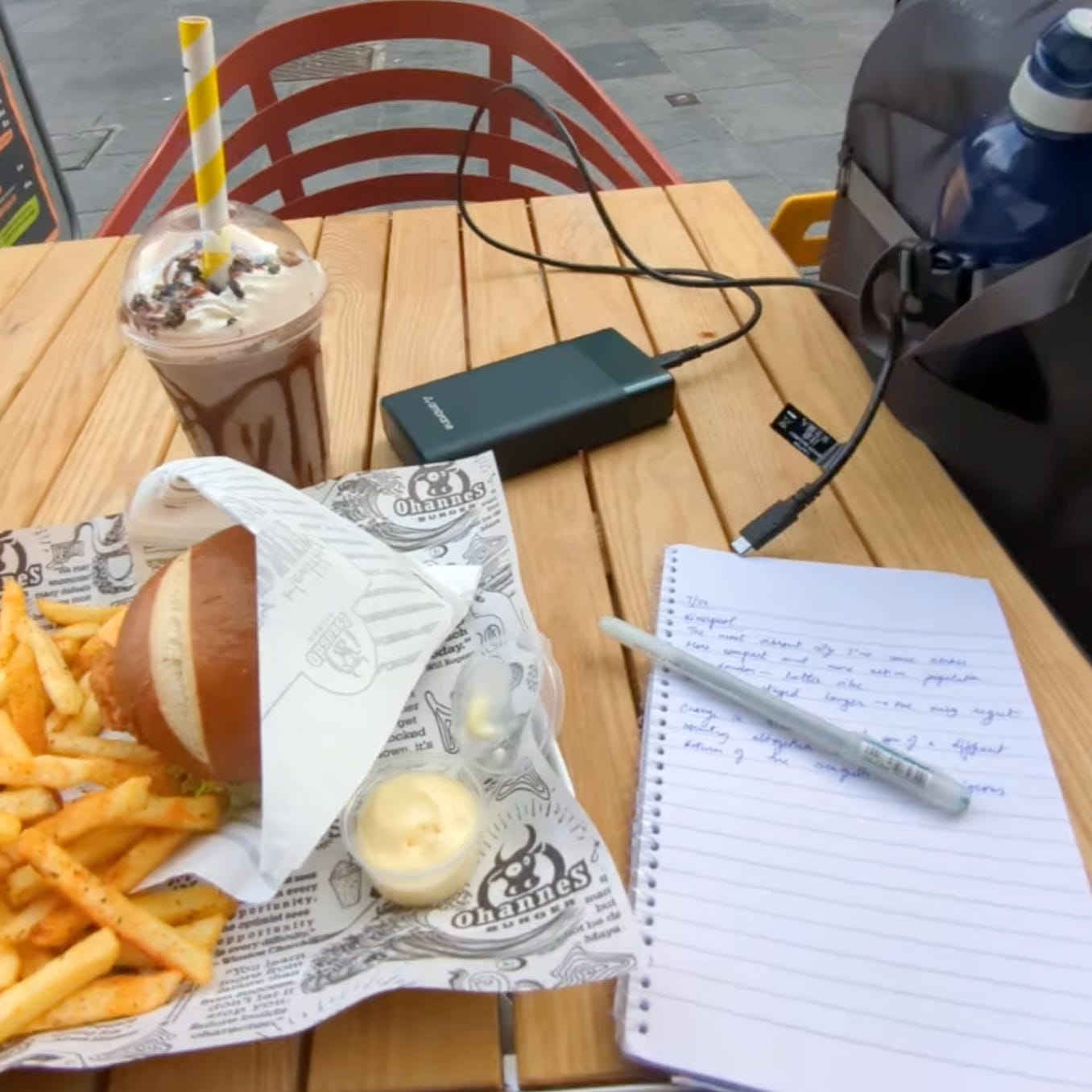
Most of the times, these problems are not novel. Most problems that you struggle with in your day-to-day are often solved. You just need to look at the answer key that kind humans (and now agents) can bring to you right in front of your eyes.
Say you’re trying to figure out how to get into a B-school after having spent a few good years in the world of tech. A problem which at least has a rough template – a difficult but repeatable playbook. Beautiful products that could be made out of such problems in today’s day and age. Check out mine.
Or, say you’re creating a binary search algorithm on a new language that you’re learning. It’s by no means an unsolved, or even a hard problem in computer science terms. But writing the code by hand v/s using an AI copilot to generate the code for you puts your brain in two separate flows. Learning about one type of search algorithm sets you up for other kinds of searches and the foundation of understanding code complexity – by no means an irrelevant skill even now!
The former allows us to get the job done as quickly as we can. The other allows to wander and make unforeseen connections. One’s an efficient short-term strategy, the other is the sustainable long-term one.
I’m firming up on the realization that both of these are needed at different points in time. The deeper I get into the act of building, the more I realize that I need both modes of thought at different points in the day. I’m best served by jotting stuff down on paper early in the morning, having made weird connections and ideas in my slumber. I best function by using agents for the act of autocomplete of thought™️ during the slow afternoon hours, when the easy way out would’ve been a small siesta and the large guilt that follows.
Basically, whatever helps sail your boat. The eventual goal of both of these modes of thought is the same – getting yourself to a flow state and keep chucking at your hard problems like a woodpecker driving itself into wood. Or being the productive sculptor that keeps chiseling the marble in small increments, no matter how small. Over hours and days and months and years, you’ll get there. First slowly, then all at once.
The risk of sticking with a single mode is also twofold. Working analogue in an age where your competitors are catching up quickly with AI makes you lose economic relevance (your “edge”). Staying “plugged in” may either make you run in circles around your hardest problems, prevent breakthroughs and also wear you out (the “burnout”). Both of these extremes are risks in stagnancy disguised as productivity – leading to plateaus and making you lose motivation altogether.
With that said, I’m still trying to find out what keeps me moving. Don’t mind this one, or tell me more if you do – it’s just a working theory that I felt like sharing out in the open. I’ve spent far too much time thinking about it in analogue isolation. It had to come out on a digital medium. This Substack felt like a good place.
Where do you like to think? Where do you like to work?
Lid on or lid off? And why not both?
The comment section is all yours.
Cheers,
Samyak
Rather than giving some job to AI why not ask AI to give something for you to think about? 😂